Get a Free Roofing Estimate Today
Emergency Roof Leak Repair in Philly: First Steps to Take
What Should You Do in the First 15 Minutes of a Roof Leak?
The moment you notice water dripping from your ceiling or spot a damp patch overhead, your first priority is containing the damage and protecting your belongings. Act within the first 15 minutes to minimize structural harm and prevent mold growth, which can take hold in as little as 24 hours in Philadelphia’s humid climate.
Start by moving furniture, electronics, and valuables away from the affected area. If water is actively dripping, place buckets or containers beneath the leak and lay down towels to absorb excess moisture on floors and carpets. If you notice a bulging spot on your ceiling where water has pooled, carefully puncture the center with a screwdriver to allow controlled drainage into a bucket below. This prevents a larger ceiling collapse and gives you control over where the water goes.
Next, locate your home’s main water shutoff valve and turn it off if you suspect the leak might be related to plumbing rather than roof damage. In many older Philadelphia rowhomes and twins, pipe condensation or HVAC issues can mimic roof leaks. Once you’ve ruled out interior sources, head to your attic if you have safe access. Bring a flashlight and look for wet insulation, water stains on rafters, or active dripping. Place additional containers under any drips you find and use a wet-dry vacuum if standing water has accumulated.
If the leak coincides with active rain or recent storm activity common to Bucks County, Montgomery County, and Delaware County, the cause is almost certainly roof damage. Do not attempt to climb onto your roof during or immediately after a storm. Instead, document the interior damage with photos for insurance purposes, and contact a contractor who offers emergency roof repair in Philadelphia to assess the exterior safely.
How Do You Locate Where the Roof Leak Is Coming From?
Understanding where your roof leak originates is critical before you can make informed repair decisions. Water rarely travels in a straight line. A drip in your living room ceiling may stem from a damaged shingle several feet upslope on your roof. Start your investigation indoors by tracing the water stain or drip back toward the highest point you can access.
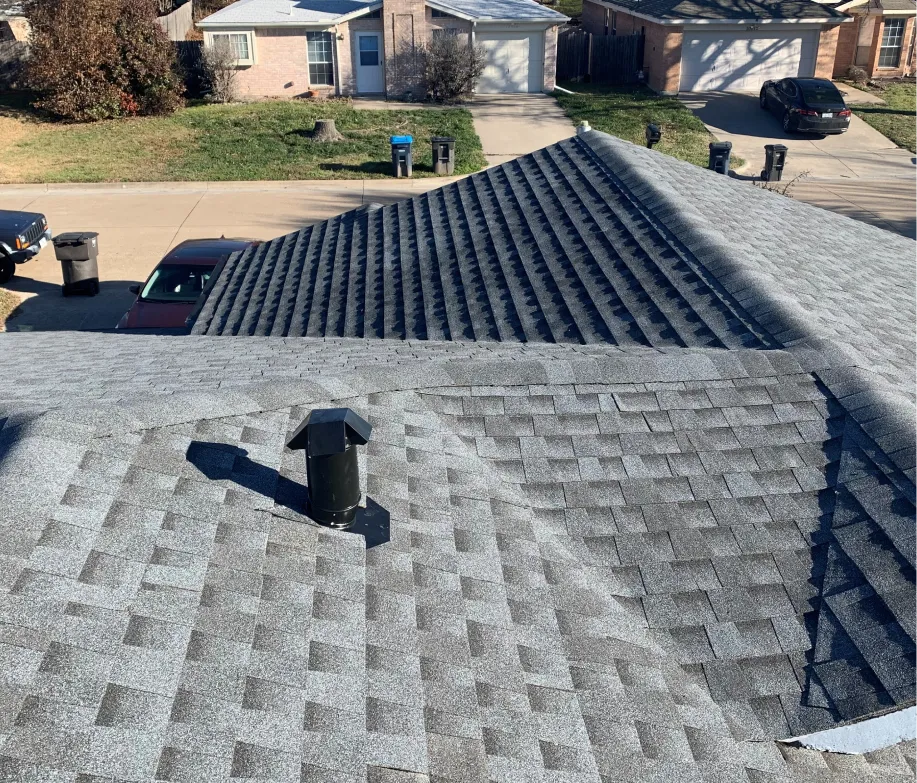
In your attic, look for dark streaks running down rafters, wet or compressed insulation, or light penetrating through the roof deck where it shouldn’t. Philadelphia homes, especially those built before 1980, often feature older roof penetrations such as chimneys, vent pipes, and skylights. These areas are the most common failure points. Check the flashing around these features closely for rust, gaps, or separation from the roofline.
From the exterior, scan your roofline for missing, curled, or cracked shingles. After the freeze-thaw cycles common to Montgomery County winters, asphalt shingles can lose granules and become brittle. Wind-driven rain during coastal storms that sweep into Delaware County can also force water under damaged shingle edges. Look for lifted flashing at roof valleys, which channel heavy water flow and are prone to wear.
If your roof is flat or low-slope, common in commercial buildings and some Philly rowhomes, ponding water after a storm may indicate drainage issues or membrane failure. These require different approaches than pitched roofs and often need a roofing contractor experienced in modified bitumen or TPO systems to diagnose properly. Identifying the source early helps you communicate clearly with your contractor and speeds up the repair process.
When Is a Tarp Enough, and When Do You Need a Full Repair?
Once you’ve contained the leak and identified its probable source, you face a decision: attempt a temporary fix or call for a permanent solution. Temporary repairs are meant to stop immediate water intrusion and buy you time, not replace the need for professional work. A quality emergency roof repair service in Philadelphia will often apply a heavy-duty tarp secured with fasteners and weighted edges to cover damaged sections until weather permits a full repair.
Tarping is appropriate when a storm has torn away shingles, split flashing, or punctured your roof deck. It keeps rain out and prevents further interior damage while you wait for materials, insurance adjusters, or safer working conditions. However, tarps are not a long-term solution. Wind can lift them, and improper installation can cause additional damage by allowing fasteners to penetrate healthy areas of your roof.
Permanent repairs involve replacing damaged shingles, re-sealing flashing, patching roof deck sections, or in severe cases, installing a new roof system. These require precise material matching, proper underlayment, and knowledge of local building codes. Philadelphia’s climate, with its hot summers and cold, wet winters, demands roofing materials and installation techniques that account for thermal expansion, ice damming, and UV exposure.
Homeowners sometimes try to patch leaks with roofing cement or sealant from a hardware store. While this can work for very minor issues like a single lifted shingle tab, it often masks underlying problems or creates new vulnerabilities if applied incorrectly. For any leak that has caused visible interior damage or involves structural components, permanent repair by a qualified contractor is the only reliable path forward.
When Does a Roof Leak Require Immediate Professional Attention?
Certain roof leak scenarios demand immediate professional intervention. If your leak appears during or shortly after a severe storm, especially the nor’easters and summer thunderstorms that frequently impact Bucks County, Montgomery County, and Delaware County, you’re likely dealing with storm damage that qualifies for insurance coverage. A qualified contractor can document the damage, provide an estimate, and work directly with your adjuster to streamline your claim.
Call a contractor immediately if you notice sagging ceilings, large sections of missing shingles, or damage to your roof deck visible from the attic. These are signs of structural compromise that can worsen rapidly. Delaying repair increases the risk of mold growth, wood rot, and even partial roof collapse during heavy snow loads in winter months. If you smell musty odors or see mold starting to form on ceilings or walls, the leak has likely been present longer than you realized, and professional remediation is necessary.
Experience and local knowledge matter when selecting a roofing contractor for emergency work. A contractor familiar with Philadelphia’s building codes, common roof types, and regional weather patterns will diagnose your issue faster and recommend solutions that last. Look for a team that offers same-day or next-day emergency response, carries proper licensing and insurance, and has a track record in your neighborhood. Ask whether they provide temporary protection like tarping as part of their emergency roof repair service while scheduling the permanent fix.
Timing is critical. A small leak today can become a major structural issue within weeks if left unaddressed. Water infiltration compromises insulation, rots framing lumber, and can damage electrical systems. In the greater Philadelphia area, where freeze-thaw cycles expand cracks and summer humidity accelerates mold, acting quickly saves you money and protects your home’s integrity. When you contact a contractor, ask about their response time, whether they handle insurance paperwork, and what their repair process looks like from start to finish.
What Are Your Next Steps After Securing the Leak?
Certain roof leak scenarios demand immediate professional intervention. If your leak appears during or shortly after a severe storm, especially the nor’easters and summer thunderstorms that frequently impact Bucks County, Montgomery County, and Delaware County, you’re likely dealing with storm damage that exceeds the scope of temporary fixes. Wind-driven rain can lift shingles, crack flashing, and force water into areas that tarps alone cannot protect.
Call for emergency roof repair in Philadelphia if you observe any of these conditions: visible holes or missing sections of roofing material, sagging ceiling drywall that suggests pooled water above, active leaks in multiple rooms indicating widespread damage, or water entering near chimneys, skylights, or valleys where flashing has likely failed. These situations require both immediate mitigation and a comprehensive assessment that only experienced contractors can provide.
Insurance claims also benefit from prompt professional documentation. Insurers in the Philadelphia region expect timely reporting and photographic evidence of storm damage. A qualified roofing contractor can conduct a thorough inspection, document the extent of the damage, and provide the detailed estimate your insurance adjuster will need. Waiting too long may complicate your claim or allow secondary damage to develop, which insurers may attribute to neglect rather than the original storm event.
Local knowledge matters when you’re facing an urgent repair. Contractors familiar with Delaware County’s housing stock, Montgomery County’s varied roof pitches, and Bucks County’s exposure to freeze-thaw cycles understand the common failure points and can diagnose problems faster and more accurately than a generalist. When you need emergency roof repair, choosing a team that operates locally means faster response times and familiarity with the building codes and permitting requirements specific to your municipality.